

How Many Animals Killed A Year By Makeup Testing
What have humans gained from animal testing? Are we getting closer to finding a cure for HIV, cancer, and other diseases through animal experiments? These 11 animate being testing statistics will help you sympathize how animal experiments (don't) piece of work and what we're (not) getting out of them.
1. Each year, more 110 million animals—including mice, frogs, dogs, rabbits, monkeys, fish, and birds—are killed in U.S. laboratories.
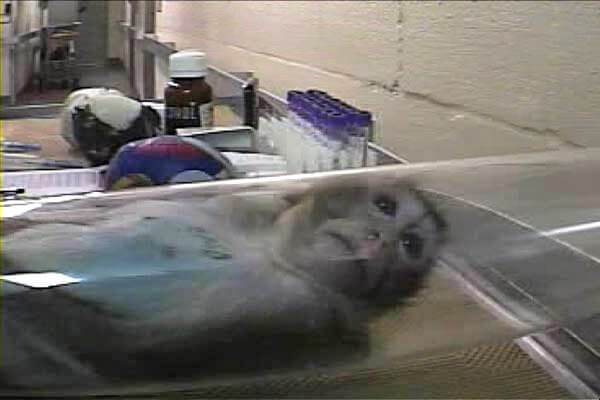
Experimenters forcefulness animals to inhale toxic fumes, immobilize them in restraint devices, drill holes into their skulls, mutilate their brains, and burn their pare and eyes—and if the animals don't dice in the process, they're killed afterward. Whether it's for biology lessons, medical training, curiosity-driven experiments, or chemical, drug, food, or cosmetics testing, these animals are confined to barren cages, socially isolated, and psychologically traumatized.
Covance Cruelty
2. 90-five percent of all drugs that are shown to be safe and effective in animal tests neglect in human trials.
This stat comes straight from the National Institutes of Health (NIH)—the regime agency that funnels billions of our taxpayer dollars into these reckless experiments. NIH has noted that the drugs fail in humans because they either don't work or are unsafe. Because animal trials are so unreliable, they make human ones more risky.


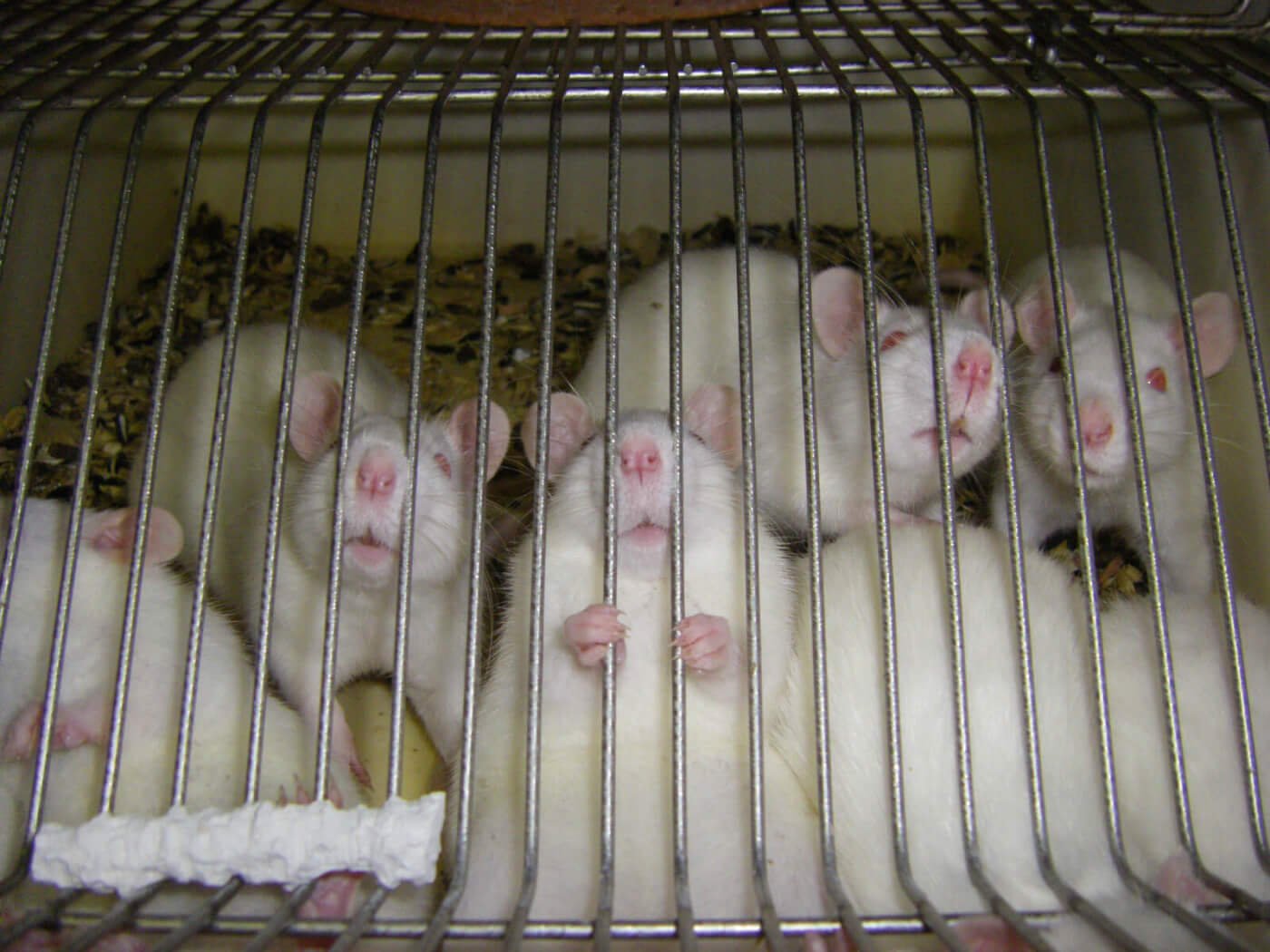
3. Ninety-nine percent of the animals used in laboratories aren't covered by federal animal protection laws.
It's equally if the government were saying, "I'g sorry, just you're just not animal plenty" to the tens of millions of rats, mice, birds, fish, reptiles, and amphibians who found 99% of the animals used in laboratories yet are excluded past the federal Animal Welfare Human action (AWA) and therefore denied even the almost basic consideration. However, even animals who are supposedly "protected" under the AWA are still allowed to be burned, shocked, poisoned, isolated, starved, restrained, made addicted to drugs, and encephalon-damaged. No exam—no thing how painful or piddling—is illegal. And pain relief isn't required.
 © Doctors Against Animal Experiments
4. Between 2015 and 2019, more than 300,000 animals covered nether the AWA were subjected to painful experiments without pain relief.
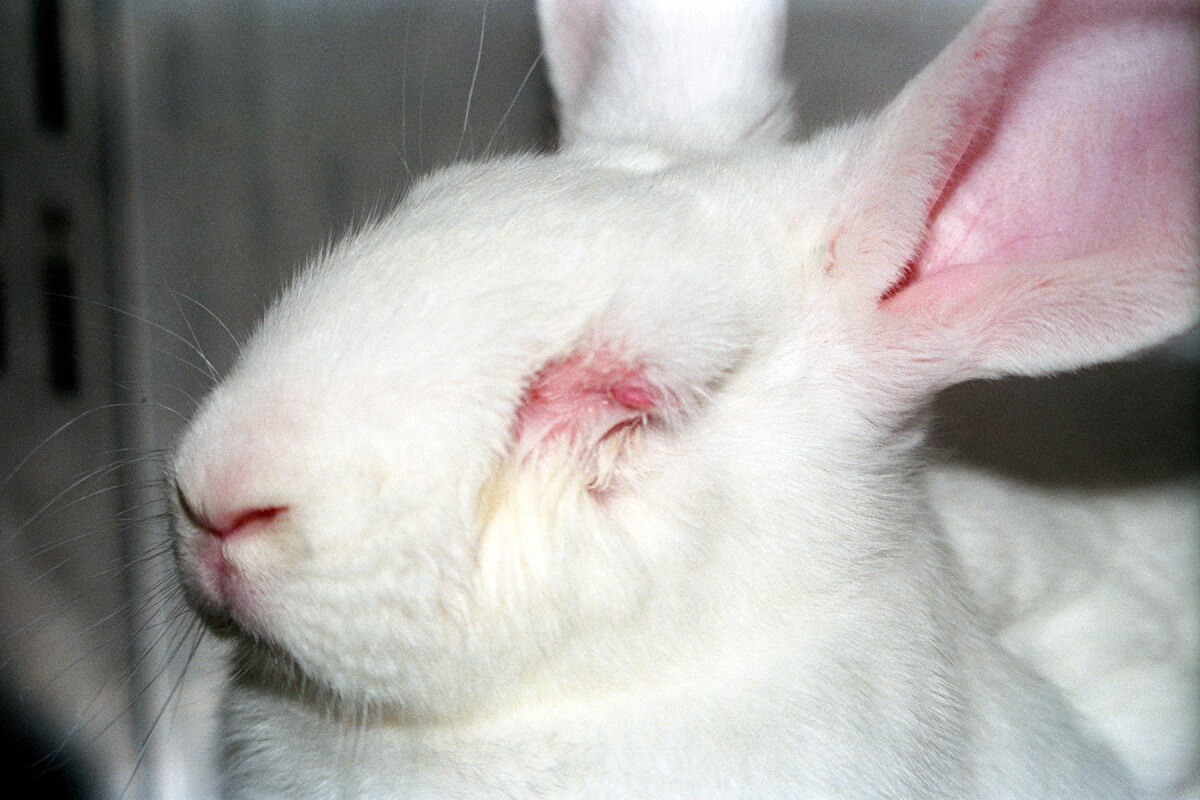
Rabbits haven't received any pain relief in the Draize eye and pare irritation and corrosion tests since they started in the 1940s. In these tests, a substance is dripped into rabbits' eyes or smeared onto their shaved skin, leaving them to suffer from inflammation, ulcers, haemorrhage, irritated and cloudy eyes, blindness, redness, swelling, discharge, and hemorrhaging.
5. A 2009 survey establish that mice and rats used in invasive, painful surgeries were only provided with post-operative hurting relief almost 20% of the time.
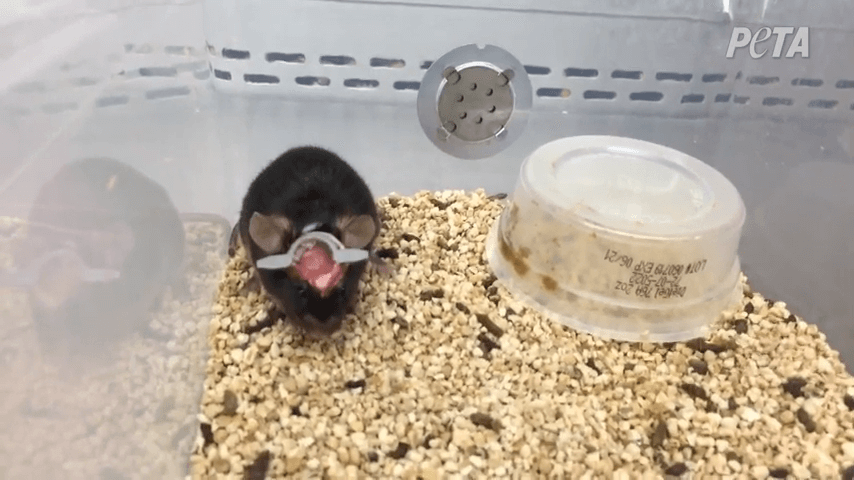
The survey found that mice and rats who were subjected to skull surgeries, burn experiments, spinal surgeries, and other horrors rarely received post-procedural pain relief. Imagine someone drilling open up your skull to expose your brain but non giving you so much as an Advil.
vi. More than 93% of experimental cancer drugs failed in the first phase of human clinical trials after testing "successfully" on animals.
The survey was based on nearly 4,500 cancer drugs developed between 2003 and 2011. Artificially inducing a condition in a good for you individual of a different species who is confined and isolated in stressful, unnatural conditions and then applying the results to naturally occurring diseases in humans is non simply unethical but besides ridiculous. Even brute experimenters acknowledge that the farthermost distress that these animals suffer jeopardizes the results.
We've been handicapped past the fact that we take been studying diseases in animals that don't really exist in animals. Mice … don't get schizophrenia. They don't go Alzheimer's disease.
—Dr. Christer Nordstedt, Eli Lilly's vice president of neuroscience research
7. The chemicals that cause cancer in rats but cause it in mice 46% of the time.
If extrapolating from rats to mice is then unreliable, imagine the inefficiency of applying results from mice, rats, rabbits, dogs, and monkeys to humans. Richard Klausner, former head of the National Cancer Institute, said, "The history of cancer inquiry has been a history of curing cancer in the mouse. We have cured mice of cancer for decades and it simply didn't work in humans."
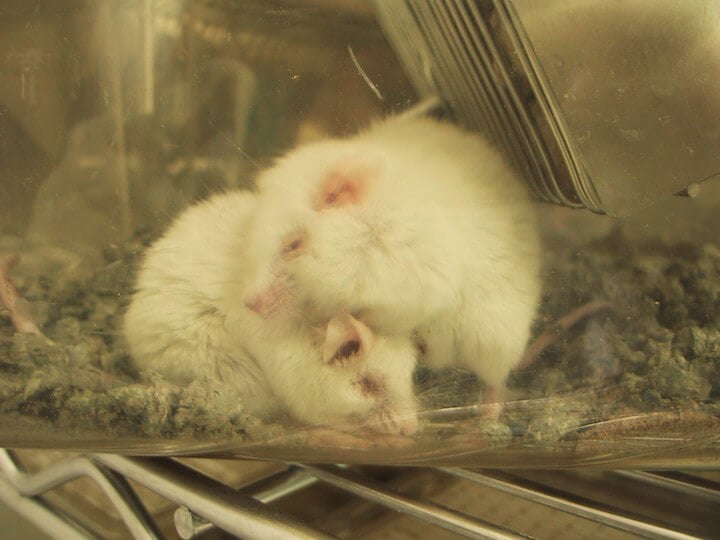
8. Ane hundred HIV vaccines have been successful in animal experiments—100% of them failed to protect humans sufficiently.
In one example, an HIV vaccine that was shown to be effective in monkeys failed in human clinical trials because it didn't prevent people from developing AIDS, and some believe that it fabricated them more susceptible to it. According to a study inThe Independent, one conclusion was that "testing HIV vaccines on monkeys earlier they are used on humans, does not in fact work."
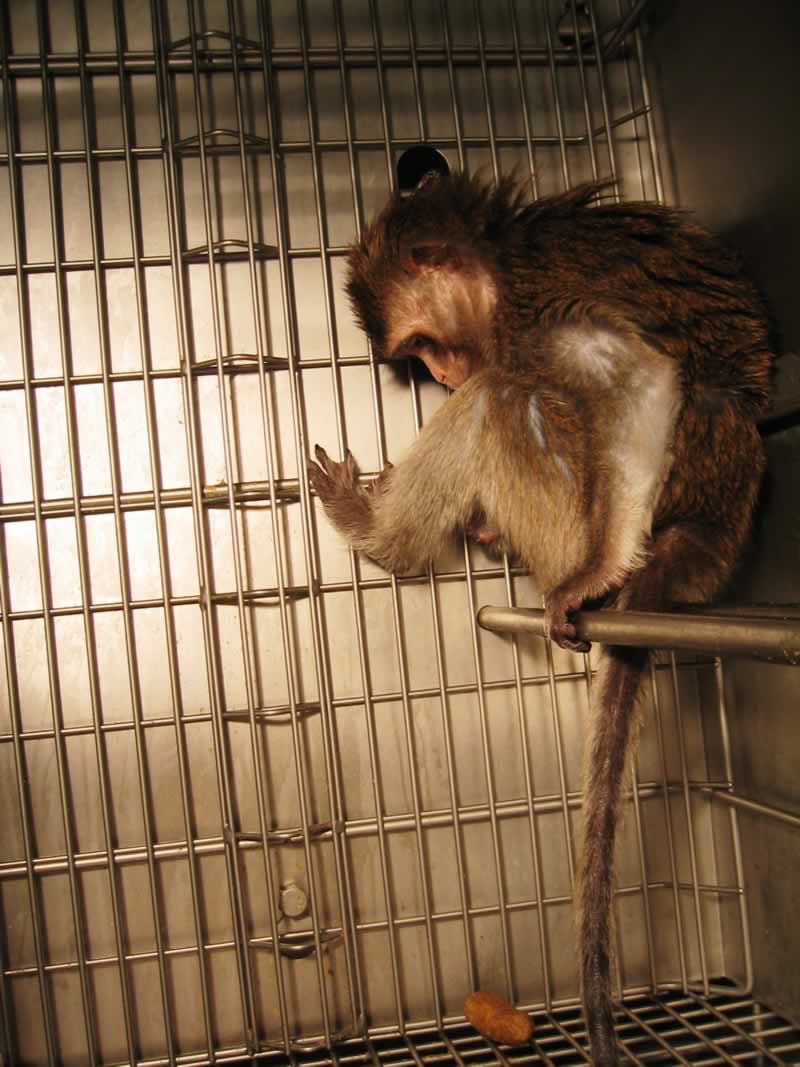
Monkeys used for experiments are often housed within tiny and virtually barren cages for their entire lives, deprived of everything that's natural and important to them.
9. Every twelvemonth in the U.South., NIH blows about 47% of research funding on animate being experimentation.
Approximately 47% of NIH-funded research involves animals, and in 2020, the bureau approaching nearly $42 billion for research and development—that's $nineteen.half dozen billion spent on animal experiments. Just for what? Practice you know of any cures for multiple sclerosis, West Nile virus, or muscular dystrophy? Well, at that place aren't any. A 2014 review paper co-authored by a Yale Schoolhouse of Medicine professor in The BMJ documented the overwhelming failure of experiments on animals to improve human health, last that "the public's continuing endorsement and funding of preclinical animal research seems misplaced."
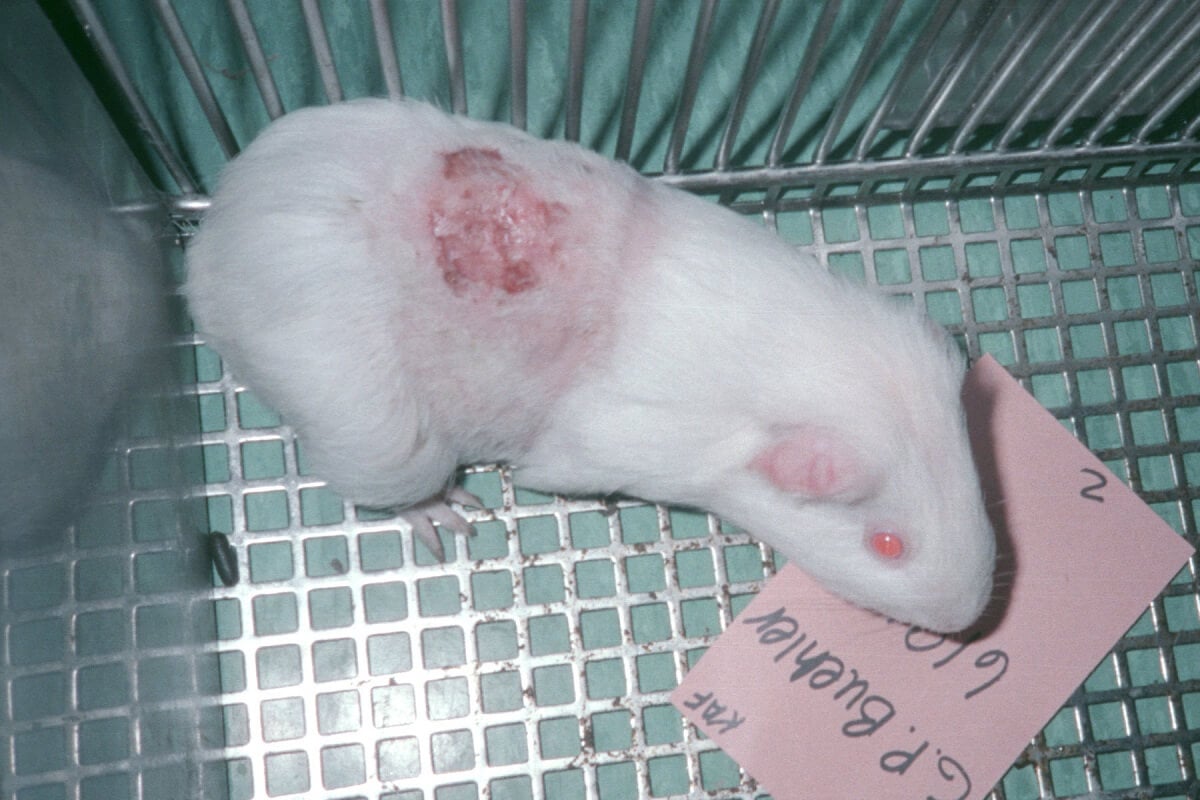
x. Currently, 52% of U.S. adults oppose the utilize of animals in scientific inquiry.
A Pew Inquiry Center poll found that the majority of American adults oppose the utilize of animals in scientific research, and other surveys suggest that the misguided folks who do support information technology but experience that manner because they wrongly believe that it's necessary. In an article published in The Journal of the American Medical Association, researchers constitute that medical treatments adult for animals rarely translated to humans and warned that "patients and physicians should remain cautious virtually extrapolating the finding of prominent creature research to the intendance of man disease … poor replication of even loftier-quality creature studies should be expected."
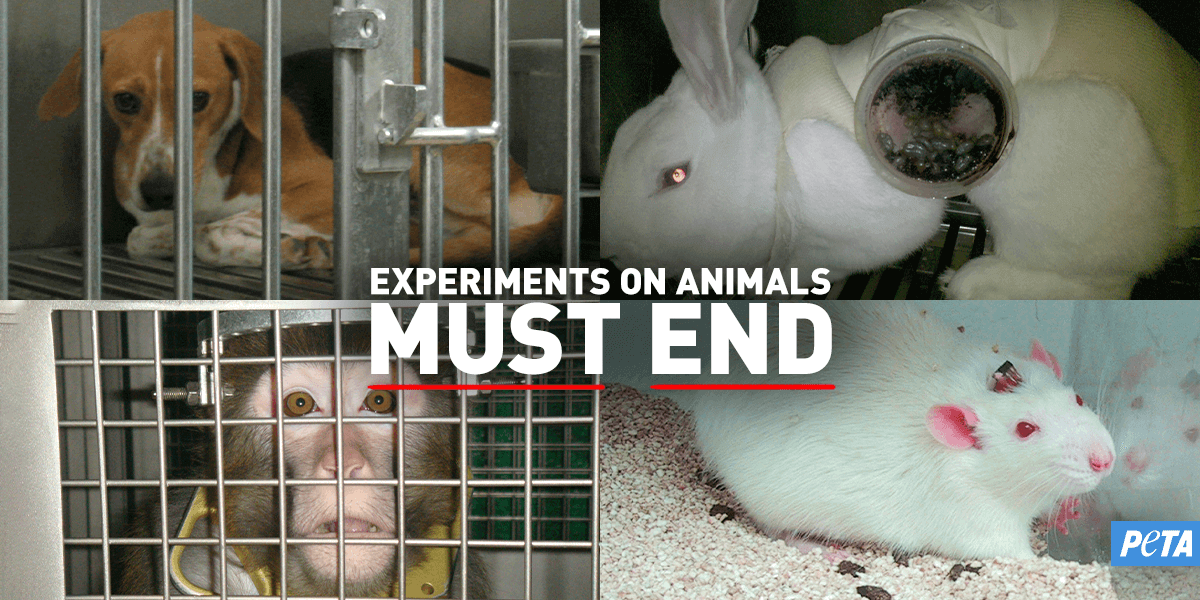
11. Since 2017, PETA U.S. has had about 150 victories for animals used in experiments.
Our victories include helping engineers develop a new ventilator for COVID-19 patients without animal testing, working with the Taiwan Food and Drug Administration to eliminate animate being tests for health marketing claims for foods, persuading Suave to become cruelty-free, and getting pharma giant Bristol Myers Squibb and others to ban well-nigh-drowning tests. PETA entities' work to stop fauna experiments—backed by the support of more than 9 million members and supporters worldwide—is saving endless animals.
*****
In NIH'due south near contempo five-twelvemonth programme, the bureau stated that "animal models often fail to provide skilful ways to mimic disease or predict how drugs will work in humans, resulting in much wasted time and money while patients wait for therapies." Animal experiments are non a good indicator of drug responses in humans or any species other than the one being exploited. Penicillin is the backbone of man antibiotics, yet it kills guinea pigs! Aspirin kills cats and causes nascency defects in rats, mice, guinea pigs, dogs, and monkeys, and morphine, a depressant in humans, stimulates goats, cats, and horses.
All these animal testing statistics can be boiled downwardly to just i: Creature experiments are speciesist—making them unacceptable 100% of the time. They don't piece of work, and even if they did, they'd nonetheless exist unacceptable. Torturing sensitive beings isn't OK, even if someone's pretending information technology's for science or medicine—information technology'southward equally simple as that.
Source: https://www.peta.org/features/animal-experimentation-statistics/
Posted by: gilmorenarvir.blogspot.com
0 Response to "How Many Animals Killed A Year By Makeup Testing"
Post a Comment